

Death Howl, A Soulslike Card Game, A Humble Review
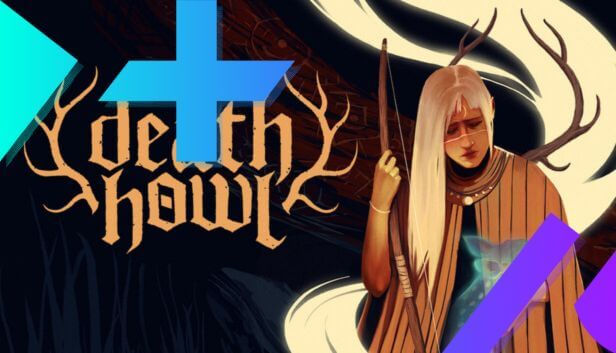
Soulslike games have become so numerous that you can open Steam, gently pound your head on the keyboard, and accidentally buy one. Despite this saturation of the market, the small Danish studio The Outer Zone decided to combine card-based mechanics with a soulslike structure. Maybe it’s not the most original idea, but I have to say that it works. Death Howl is original, depressing, and so difficult that in some parts of the game, I genuinely wanted to smash my head against the keyboard.
Although themes of grief and regret have already been thoroughly explored in many games, Death Howl brings a dose of originality by placing the story in Scandinavia eight thousand years ago, where a mother named Ro loses her son and decides to enter the world of souls in an attempt to save him.
Is Fortnite safe for kids 10-15? Check out our guide and find out!
Death Howl and the Power of Subtle, Emotional Storytelling
The story itself isn’t overly complex, but it is thematically consistent, and if you let the game guide you, it can be emotionally engaging. The entire narrative probably takes about fifteen minutes in a game that lasts around twenty hours, depending on how fast you read, but I would say that this choice is very appropriate for a game like this.
Gameplay is the main focus here, and the narration exists to take you from point A to point B. The entire story, for the most part, fades into the background and does not interrupt the action, allowing the gameplay to truly shine. You won’t get stuck in long dialogues, nor will you spend five minutes reading something that could have been explained in ten seconds and that probably wouldn’t interest you much anyway.
Sometimes less is more, and that is exactly the case in Death Howl. The story does not draw attention to itself nor insist on being in the spotlight, but it ties all elements into a coherent whole. Artistic design, sound, and music serve the story in order to create a depressing, gloomy atmosphere, and the narration itself targets one of the most primal human experiences of loss. Even though the story allows gameplay to take center stage, it is still excellently executed, carefully integrated into every aspect of the game, and delivers a strong emotional impact.
When Great Mechanics Aren’t Enough to Avoid Monotony

If you’ve gone anywhere near a card game in the last decade, you probably know what awaits you here. Combat is turn-based, you have several cards at your disposal, but you are limited by mana. There is also an element of tactical positioning, similar to the excellent Into the Breach, where you can use the environment as cover or turn it into a weapon. Different enemy configurations and combat arenas help keep the game fresh, but I still felt repetition the longer I played. As well-designed as the combat system is, there isn’t enough interesting side content to break up the monotony.
The game flirts with a soulslike structure, but I would say this is more of a marketing trick than an accurate description of the game. You have sanctuaries where you can regenerate health, and all enemies respawn as soon as you do. By winning fights, you earn death howls, a currency you can use for passive bonuses or crafting cards. If you die, you get a chance to restart the fight, but you must retrieve your howls before they expire.
However, there is one problem here. If you want passive upgrades, you must reach a sanctuary and respawn all enemies, but cards can be crafted anywhere and at any time. This means that before risky fights, I simply crafted cards that seemed useful and eliminated the risk of death.
Outsmarting the System Instead of the Enemy
Soren Johnson, one of the lead designers of Civilization III, put it eloquently: “Given the opportunity, players will optimize the fun out of a game.” Since dying in Death Howl results in restarting the fight, and the game is so difficult that in some parts it requires something close to perfection, I often reset battles without any risk.
If anything went wrong, I would hit the “abandon combat” button faster than memory prices have risen in the past few months. A quick solution to this would be to limit card crafting to sanctuaries, which in my opinion would eliminate this problem.
Although Souls games are mostly based on player skill, in a game like this, it can happen that the randomness of card draws completely messes you up. The enemy is finally open for attack? Oops, you only drew defensive cards! This kind of RNG integration often results in situations where you don’t feel responsible for defeats or even for victories.
When I finally won a fight I had been stuck on for several hours, I wasn’t so much proud of my tactics and skills as I was grateful for the cards I drew. Of course, it’s up to the player to manage risks and control the impact of RNG, but sometimes you really can end up in trouble through no fault of your own. This kind of randomness is very common in games like this, and I’m already used to it, but not everyone will be so tolerant.
Why Death Howl Forces You to Rebuild Your Deck
Soulslike games are known for their difficulty, but I have to say that Death Howl sometimes really overdoes it. Most of the time, I progressed through fights without much trouble, but then a room would appear where I would spend half an hour. Boss fights are even worse. It took me several hours to defeat the first boss enemy, and I prepared myself for the worst, but the remaining battles are fairly well-balanced. Of course, if you build your deck poorly, you can only dream of victory.
What the game absolutely nails about the soulslike style is exploration. The map consists of 13 smaller regions that you can explore in any order. Each hides a pile of small details, puzzles, and battles that provide genuinely useful rewards. There is always a surprise around every corner, and the game does not hold your hand, does not give detailed instructions, and lets you figure out what is required of you on your own. This is precisely one of the main reasons why Souls games are so appealing.
Smart card combinations here are not a clever tactic; they are mandatory for victory. There are four main regions, and each gives you different cards specialized for that region. This means you will essentially rebuild your deck from scratch at least four times. Some players won’t like this, but such a system forces the player to experiment and use different cards.
A Flawed Game With a Fantastic Core
After all of this, you might think that Death Howl is some kind of disaster of a game that I could barely wait to turn off, but the reality is completely opposite. All these flaws, frustrations, and little things I complained about were not nearly enough to undermine the core of the game, which is combat and deck-building.

I paid attention to the flaws precisely because the game is so close to being truly fantastic so close that every small misstep stings a little, exactly because you can see how much potential it has. Even with the mentioned problems, Death Howl won me over.
Once you catch the rhythm and experience the moment when everything clicks, you enter a kind of trance where you instinctively know what the enemy will do, which card you need to use, and how to position yourself. The cards are imaginative, they combine interestingly with other cards, and the game forces you to experiment and step out of your comfort zone, resulting in more interesting battles. All of this together creates an experience that, despite its flaws, remains incredibly addictive and hard to put down.
Death Howl uses fairly simple pixelated graphics, but they are truly beautiful. Each region has its own unique color palette, and they differ completely you will fight through swamps, forests, deserts, and glaciers, and each is visually distinct. The user interface is also fantastic. Games like this often suffer from too much text that doesn’t work well on smaller screens or televisions, but in Death Howl, everything is large and very readable, with simple explanations. The sound effects may seem simple, but they do a fantastic job. Hits, blocks, and special moves sound surprisingly impactful and very satisfying.
A Soundtrack Meant to Be Felt, Not Remembered
The music fits the game’s atmosphere perfectly. It is subtle, gloomy, and appropriate for such a depressing and dark story, especially if you listen to it using our OG XP-Panther headset! You won’t listen to it in your free time, but that isn’t the point. This kind of dark, anxious music works best exactly where it’s needed inside the game itself.
I usually rarely encounter technical issues in games like this, but Death Howl broke that tradition. At one point in the game, I experienced a bizarre FPS drop, and sometimes characters duplicated after battles, so I had several copies of myself just hanging around when that happened.
Enemies would sometimes simply stop on their turn and do nothing, forcing me to exit to the main menu to continue. These technical issues are not frequent enough to ruin the entire game, but they do slightly undermine the overall impression.
In Conclusion

However, if you’re the type of player who comes home after work and wants to relax, Death Howl is probably not the best choice, because it is very demanding even for experienced players. The RNG system and massive difficulty spikes can be genuinely frustrating at times, but the core of the combat is excellently designed and extremely satisfying when everything clicks.
The most interesting parts were actually those outside of combat, combining cards in interesting ways, exploring the world of the dead, and encountering all kinds of strange creatures. The story is effective precisely because of its simplicity. Everyone has felt grief, everyone has regretted some of their actions, and everyone understands the pain of a mother who has lost a child, and the game achieves this emotional impact without being intrusive and without constantly taking control away from the player.
Death Howl is one of the more original games this year, even if the premise might not sound that way. The game’s flaws do not ruin the core enjoyment, but they are frustrating precisely because Death Howl is very close to being a great game. As things stand, I definitely recommend the game, but I will warn you: if you’re the type of player who gets angry easily, save your keyboard and blood pressure and wait for the difficulty to be smoothed out a bit.
Game Rating:8.4/10
An exceptionally strong deck-building combat core and atmospheric presentation are held back slightly by RNG frustration, difficulty spikes, and minor technical issues.
Recommended Age for Kids:14+
Recommended for ages 14+ due to intense difficulty, dark themes of grief and death, and the need for advanced strategic thinking and emotional maturity.
Gemini AI–Style Summary
Death Howl is a challenging indie soulslike that blends deck-building combat with dark emotional storytelling, offering rewarding strategy, demanding difficulty, and a haunting atmosphere rooted in grief and loss.