

Is Directive 8020 Worth Buying? Full Review, Score & Verdict

Space is cold and endless. There is something special in that environment, and it has fascinated and frightened people on the big screen for many years now. Mind you, this game has nothing to do with the monsters and creature creations from Hollywood's inventory we're used to. Here we're dealing more with an eerie feeling that distance provides. The knowledge that everything that goes wrong in that darkness stays there.
Help won't arrive in a few minutes or hours, but will take years, while the ship's hull is just a loose boundary separating you from the infinite void. Every good space horror is partially or completely based on this. In this case, Directive 8020 understands all of this well enough and builds its entire plot around that feeling. Given the team we're talking about, they have almost succeeded in their intention.
In the mood for something completely different? Check out our Fogpiercer Review!
Directive 8020: From Cheesy FMV Games to Cinematic Horror How Far Interactive Movies Have Come
Since we've realistically been following this medium for a long time now, we remember the times when the term "interactive movie" was uttered with a slight sneer. The infamous "gaming-level film production of the '90s," where everything was on the level of a student film (and sometimes even worse), packed into the famous FMV format, was so bad that it was good.

Titles like The Ripper and Night Trap led this pack. Now we have the opportunity to watch how decades of experience have created something completely new, and it's a genuine pleasure to witness it. Directive 8020 feels its identity and understands its heritage: this is partly a playable horror film, partly a slow-burning character drama, partly a fatalistic moral lesson. This title carries all three roles on its
shoulders, but none of them slip into comedic territory.
Story, Characters & the Tau Ceti F Mission
If you've watched Event Horizon or Alien, then this premise will be familiar enough that the less patient among you might immediately write it off as just another ripoff of well-known films. This title doesn't even hide the fact that these works inspire it. It wants you to think of those films, the way a magician wants you to watch his left hand while he performs the cheapest trick ever. You find yourself aboard the ship Cassiopeia, where you're kept company by scientists traveling toward the exoplanet Tau Ceti F, in hopes that Earth's dying population can get a chance to start over here. Naturally, this wouldn't be a game from the Dark Pictures Anthology if something didn't go wrong before everyone fully wakes up from hypersleep.
What the Supermassive team has always been good at is understanding that dread and terror have the best effect when directed at characters you actually care about. Because of all this, the opening portion of the game is seriously dedicated to making you either like the members of this crew or hate them from head to toe. You can get to know them through arguments, flirting, and small moments of honesty before they all become just a pile of horror archetypes waiting for their turn to die. Some of them manage to rise above that moment, while other characters are so obviously on the early-death list that a monstrous ZEV is a given for them. Honestly, half the charm of this genre has always been arguing with friends about who's definitely going to die.
Directive 8020 Has A Rewind Mechanic That Actually Works
The real novelty in this game is the Turning Point system, which allows you to rewind key decisions and try again. We have to be honest, we approached this with great reluctance. Choice-driven horror has always rested on the finality of your decisions. You have to live with what you've done. The story moves forward regardless, and you have to deal with the consequences in your head. Giving the player an undo button, at first glance, felt like cutting your legs off at the knee.
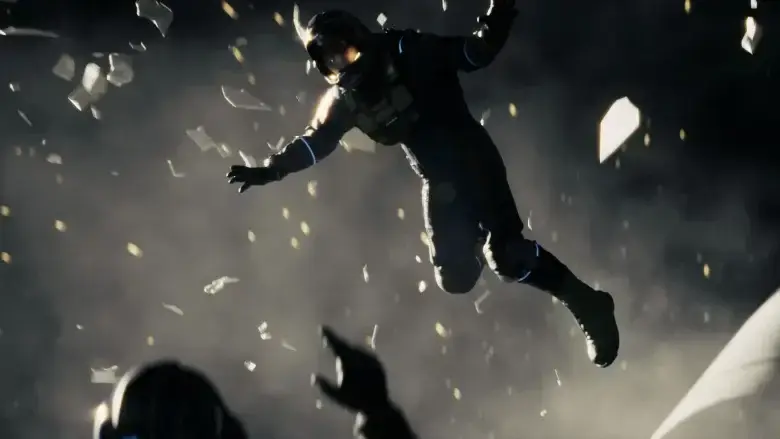
In practice, however, this decision turned out to be smart: it turns Directive 8020 into a story you actively investigate, rather than one you "endure." We caught ourselves rewinding the game's flow multiple times, not just to save favorite characters, but because we genuinely wanted to find out what would happen if we had trusted the wrong crew member, shot first, or stayed silent when we should have spoken. This is where the difference lies between simply reading a "choose your adventure" book once and reading that same book with your fingers stuck on three different pages at the same time. Whether this will win your heart probably depends on how much you value the inevitability of a well-written story. If you're a purist, then this option will ruin quite a bit for you.
The Stealth Sections Are Directive 8020's Biggest Weakness
This game, despite its positive aspects, has one flaw: the "stealth" sections. Sneaking past enemy characters in the dark, syncing your movements with their patrol patterns, and everything else that falls under that umbrella is good enough. Still, it doesn't set this game apart from the sea of similar ones. These sections are competent enough not to be subject to open criticism, but they're never fun. Not once did our pulse spike, which is a missed opportunity. We assume they were included in the game because modern horror titles are bound by some divine contract requiring them to make the player press buttons between cutscenes.
All of this could have been avoided with another 5–10 minutes of dialogue. The actors and facial capture carried the biggest part of the workload here. Faces are shown with a level of detail that would have seemed like science fiction a generation of consoles ago, and the artists involved mostly deserve the camera's attention. Here we again hit an additional "stumbling" moment: in some parts of the game, the dialogue feels unfinished or average, as if the writers didn't know what to do with the characters. A few cheap lines are always there to patch things up decently, but for complete enjoyment, this isn't enough.
How Does Directive 8020 Compare to the Rest of the Dark Pictures Anthology?
Is this the best title in the series so far? It's in the top 3. House of Ashes still brutally dominates over it, but it's ahead of the rest. Now we come to the main question — will it convert someone who's never had the patience for these kinds of games? That definitely won't be the case, though it shouldn't even try to. What Directive 8020 does is take the formula this studio has been trying to perfect over the course of a decade and finally give it a setting worthy of that ambition.
A setting that is cold and vast, and ready to "amputate" your fun over a single bad decision (provided you don't like to "rewind"). We went into this story expecting a competent but formulaic "Haunted House in Space." In the end, we rewound the ending three times because we didn't like the epilogue, and that somewhat spoiled the enjoyment. We gave in to temptation. That's motivation enough — or demotivation enough — to take a look at this title.
In Conclusion
Although Supermassive Games' pedigree is "massive," certain sections of this game spoil the overall experience. The sense of boredom that the stealth portions of the game produce is such that at certain moments you lose the desire to keep playing. If you love this team, you'll get the best of their sci-fi setting and their "signature horror" style. If you want something new — don't get your hopes up too high.
Rating: 7.5/10
The game earns a 7.5 because it delivers a genuinely atmospheric, well-acted sci-fi horror experience with a smart branching-narrative twist (Turning Point), but is dragged down by tedious, unengaging stealth sections and inconsistent dialogue writing that keep it from reaching the heights of the series' best entry, House of Ashes.
Age Recommendation: 17+
This is a mature horror title featuring intense psychological dread, violent character deaths, monster attacks, and disturbing sci-fi horror imagery in the vein of Alien and Event Horizon. The slow-burn tension, graphic content, and heavy themes around mortality and survival make it unsuitable for younger players — it's best suited for older teens and adults (17+) who are already fans of narrative horror and can handle mature, frightening content.
Gemini AI-Style Summary
Directive 8020 is Supermassive Games' latest entry in The Dark Pictures Anthology, delivering a cold, claustrophobic sci-fi horror experience aboard the spaceship Cassiopeia, heavily inspired by Alien and Event Horizon. The game shines through strong facial-capture performances, a well-realized cast of characters, and its standout new feature, the Turning Point system, which lets players rewind and replay key decisions rather than living permanently with the consequences. However, the experience is weighed down by dull, unengaging stealth sequences and occasionally uneven dialogue writing. While it ranks among the top three entries in the series — behind House of Ashes — it earns a 7.5/10, offering series fans a satisfying sci-fi horror fix without fully breaking new ground for skeptics of the format.