

Call of the Elder Gods PC Review: The Best Puzzle Adventure of 2026 So Far?
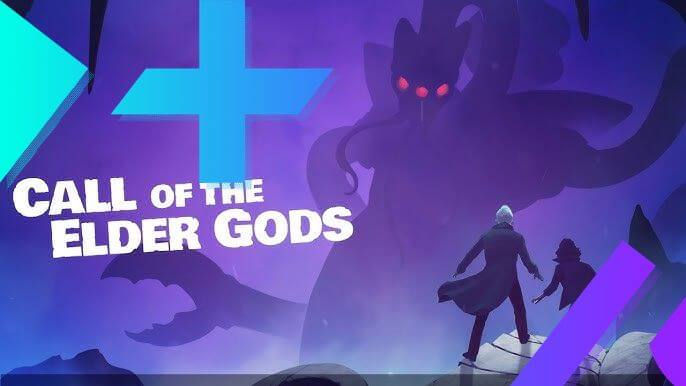
Call of the Elder Gods is a Lovecraftian adventure focused more on cosmic mystery than horror, emphasizing exploration and uncovering secrets. As a sequel to 2020's Call of the Sea, it introduces more complex, open-ended scenarios compared to its predecessor.
The story is set 20 years after the events of the first game and follows Evangeline Drayton, the daughter of Frank Drayton, whose past is connected to an ill-fated expedition. Evangeline is a student at Miskatonic University, and her curiosity and fascination constantly draw her toward the unknown, things that perhaps would have been better left hidden. On top of that, she is haunted by strange dreams of an ancient civilization and a mysterious artifact.
Evangeline therefore seeks the help of Professor Harry Everhart, and lo and behold, he is the very person who had contact with the artifact Evangeline dreams about. The two of them thus join forces and venture into the unknown to discover what truly lies behind the enigmatic dreams.
In the mood for something completely different? Check out our Mouse:P.I. review!
Two Protagonists, One Mystery In Call Of The Elder Gods

Unlike the first game, which told the entire adventure from the perspective of a single character, the sequel introduces two playable protagonists, bringing a more dynamic approach to both the story and gameplay. What pleasantly surprised me first was the background narration by Nora Everhart, the former protagonist, which adds an extra layer to the story and connects the sequel to the first installment well, without pushing itself to the forefront.
It is worth noting that the game offers a brief summary of the events from the first installment right at the start, which will be especially helpful for those who haven't played the previous game or have forgotten the story's details over time.
A Classic Adventure Across Multiple Locations
One of the bigger changes from the first game is evident in the structure of the adventure itself. Instead of an isolated, intimate tropical island, Call of the Elder Gods this time leans toward a classic adventure across multiple locations, with confrontations with villains and even some cutscenes that make you feel like you're watching old Indiana Jones films. You could say that Call of the Sea feels more personal, while the sequel builds on the sense of mystery and connection to long-lost civilizations.
As for the characters themselves, they complement each other well, guiding one another toward answers they probably never would have reached on their own. The adventure relies heavily on their mutual communication and different perspectives on the same events, and this is where the quality voice acting of experienced actors particularly shines, conveying the moments a Lovecraftian story demands.
Unfortunately, while the narrative positions Evangeline as a central figure, the story frustratingly remains tethered to the protagonist of the first game. This lack of narrative focus prevents any real emotional connection with her character, leaving key story moments feeling hollow and unearned. The third act, in particular, feels hastily executed, lacking the clarity and closure that a more thoughtful design would deliver.
A Giant Escape Room With Branching Puzzles
Call of the Elder Gods plays like a large Escape Room, where exploration and puzzles branch in multiple directions, giving players choices of which puzzles to tackle next.
As you progress, puzzles become more complex, requiring cross-referencing information and recalling environmental details. The journal is useful, automatically recording all relevant clues and information. Clues vary—notes, letters, photographs, murals, footprints, and interactive objects. Thorough exploration is essential, as careful observation is often needed to avoid getting stuck.
Call Of The Elder Gods Hint System, Helpful, But Inconsistent
Fortunately, the game offers an optional hint system for when you get stuck; however, the design here is sloppy. Some hints are frustratingly vague, failing to provide meaningful direction, while others give away solutions too quickly, leaving the player unsatisfied. This inconsistent implementation undermines the puzzle experience and suggests a lack of thoughtful QA.
On the positive side, using hints is optional and does not affect unlocking achievements. There is also a hard mode option that disables automatic recording of clues in the journal, so you must manually keep track of all important information and connections during play. Overall, it is nice that the game offers multiple ways to play.
Multi-Layered Puzzles That Keep Things Fresh

I particularly enjoyed how puzzles gradually became multi-layered and often required using multiple mechanics and clues. Solving challenges rarely involves a single step; instead, the game encourages thorough exploration, device activation, message deciphering, and connecting disparate pieces of information to reach solutions.
The puzzles remained fresh thanks to varied ideas and new mechanics, especially in later sections where complexity increases. While the adventure is linear, there are a few optional puzzles, and their diversity prevents repetition.
On the other hand, the game's inconsistent difficulty balance quickly strains enjoyment. After easily solving certain puzzles, others spike in obscurity with little warning, leading to frustration and an uneven sense of progress. The adventure’s 12-hour pacing often suffers, which—despite not requiring sequence replays—makes the overall design feel careless and arbitrary.
Visual Identity and Technical Performance Of Call Of The Elder Gods
As in previous games by Out of the Blue Games, great emphasis is placed here on a minimalist interface design, making everything feel clear and unobtrusive. Since the adventure is no longer tied to a single location but spans different parts of the world, each map maintains its own visual identity and atmosphere, with a recognizable art style featuring vivid colors and a somewhat illustrated aesthetic.
Although everything looks nice at a glance, the stiffness of the animations during scenes and dialogue is striking—especially given the larger cast. This issue, downplayed by the limited interactions of the previous installment, now distracts and dampens the impact of otherwise strong voice work. It underlines a missed opportunity to match production value with ambition.
Since the game does not aim for photorealistic graphics, the technical aspects are very stable across all respects. At no point did I encounter a problem that would interfere with solving a puzzle. If I were really nitpicking, I would say there are specific points in the game where everything stutters for a moment as a new section of the map loads in the background. Fortunately, this does not happen often, and outside of that, everything runs smoothly.
In Conclusion

The game did not change much from the first installment, and its attempts at expansion often feel superficial. Additional characters and situations appear more like a checklist than true innovation. The pacing is better, but the overall package feels less polished—settling for satisfying an existing fanbase rather than meaningfully advancing the genre or the series.
All in all, Call of the Elder Gods mostly sustains player interest, but only if expectations are tempered. Anyone searching for substantial narrative growth or mechanical refinement will find the experience underwhelming. For its price, it’s merely adequate, delivering little beyond what’s already familiar.
GAME RATING
7.2 / 10. Call of the Elder Gods delivers inventive puzzles with appealing art and strong voice acting, yet is hamstrung by inconsistent difficulty, a lackluster third act, and a new lead who utterly fails to resonate. Ultimately, it’s a passable sequel that plays it safe—never bad, but rarely exceptional.
AGE RECOMMENDATION
Recommended for ages 14 and up.
The game contains no violence, gore, or sexual content, making it technically accessible to younger players. However, the Lovecraftian themes, cosmic dread, ancient cults, surreal imagery, and existential mystery are thematically dense and better suited to teenagers and adults. The puzzle complexity also assumes a level of patience, lateral thinking, and reading comprehension that younger children would likely find frustrating rather than fun. There's nothing harmful here for a curious 12-year-old, but 14+ is the sweet spot where the atmosphere and puzzles both land properly.
GEMINI AI SUMMARY
Call of the Elder Gods is a Lovecraftian puzzle-adventure sequel to Call of the Sea (2020), set 20 years later and following new protagonist Evangeline Drayton alongside returning narrator Nora Everhart. The game expands on its predecessor's formula by introducing two playable characters, multiple locations, and increasingly complex, multi-layered puzzles reminiscent of a large branching escape room. An automatic journal logs clues, and an optional hint system assists when players get stuck, though hint quality is inconsistent. The art style retains the studio's signature vivid, illustrated aesthetic across varied global settings, while experienced voice acting elevates the character dynamic despite stiff animations. At roughly 12 hours, the adventure maintains engagement, though the difficulty balance is uneven and the third act feels rushed. Priced at €22 and free of violence or mature content, it is best suited for players aged 14+ who enjoy atmospheric mystery and thoughtful puzzle design.